
Getting in and out of bed becomes harder as we age. Your parent might struggle to sit up without support. They might feel unsteady when standing. A fall from bed can lead to serious injuries.
Bed rails give seniors something solid to grip. They help with rolling over, sitting up, and standing. The right rail can mean the difference between confidence and fear at bedtime.
This guide covers the best bed rails for seniors in 2026. You’ll learn about safety features, installation types, and which models work best for different needs. We’ll also explain how bed rails fit into a broader approach to daily living aids that keep older adults safe at home.
Quick answer: The best bed rails combine sturdy construction, easy grip handles, and secure attachment. Look for models that fit your bed type and match the user’s strength level.
Why Bed Rails Matter for Senior Safety
Falls are the leading cause of injury among older adults. Many of these falls happen at night or early morning when getting out of bed.
Bed rails provide stability during vulnerable moments. A senior with arthritis can pull themselves up without straining weak joints. Someone recovering from surgery has a safe way to reposition without assistance.
These devices also prevent rolling out of bed during sleep. Restless sleepers or those with cognitive decline benefit from this barrier.
Bed rails offer psychological benefits too. Seniors who fear falling often avoid getting up at night. This can lead to other health issues. A reliable rail restores confidence and independence.
The key is choosing a rail that matches the user’s abilities and bed setup. We’ll help you find the right fit.
Types of Bed Rails for Elderly Adults
Assist Rails (Half Rails)
These shorter rails attach to one side of the bed. They extend about halfway down the mattress length.
Assist rails help with sitting up and transferring in and out of bed. They don’t prevent rolling out during sleep. Most models work well for seniors who need minimal support.
Installation takes minutes on most bed frames. You slide a strap or bracket under the mattress. No tools required.
Full-Length Bed Rails
Full rails run the entire length of the bed on one or both sides. They create a barrier that prevents falls during sleep.
These work best for seniors with dementia or those who move a lot at night. The extended coverage provides maximum protection.
Some models fold down for easy access. Others have gaps that allow getting in and out while preventing rolling.
Swing-Down Rails
These rails pivot downward when not needed. You lift them up for support and security. You lower them to make transfers easier.
Swing-down rails suit seniors who want flexibility. Caregivers appreciate the easy access for bed changes and personal care.
Look for models with secure locking mechanisms. The rail should stay firmly in place when raised.
Transfer Handle Rails
Small, portable handles that slip between the mattress and box spring. They provide a sturdy grip point for sitting up or standing.
Transfer handles work well for seniors who travel or split time between homes. They’re also good starter options for those unsure about committing to larger rails.
These don’t prevent falls during sleep. They only assist with transfers.
Key Safety Features to Look For
Weight Capacity
Most quality rails support 300 to 400 pounds. Check the manufacturer’s rating. Factor in the user’s weight plus any pulling force during use.
Heavier users need rails rated for at least 400 pounds. Don’t assume all rails handle the same load.
Grip Design
Look for padded foam handles or textured surfaces. Smooth metal bars become slippery and uncomfortable.
The grip area should be large enough for arthritic hands. Seniors with limited hand mobility benefit from wider, cushioned grips.
Stable Attachment
The mounting system determines safety. Rails that slip under the mattress work for most beds. Models with clamps or brackets offer extra security.
Test the rail before regular use. Apply downward pressure. Push and pull. It should not shift or wobble.
Gap Safety
Some rails have openings that can trap limbs or cause entrapment. The FDA recommends gaps smaller than 4.5 inches or larger than 12 inches.
Avoid rails with 5 to 11-inch gaps. These pose the highest risk.
Height Adjustment
Adjustable rails adapt to different bed heights and user preferences. This matters if the senior uses a hospital bed or adjustable base.
Fixed-height rails work fine for standard beds. Measure your mattress height before buying.
Best Bed Rails for Seniors in 2026
For Standard Beds: Drive Medical Home Bed Assist Handle
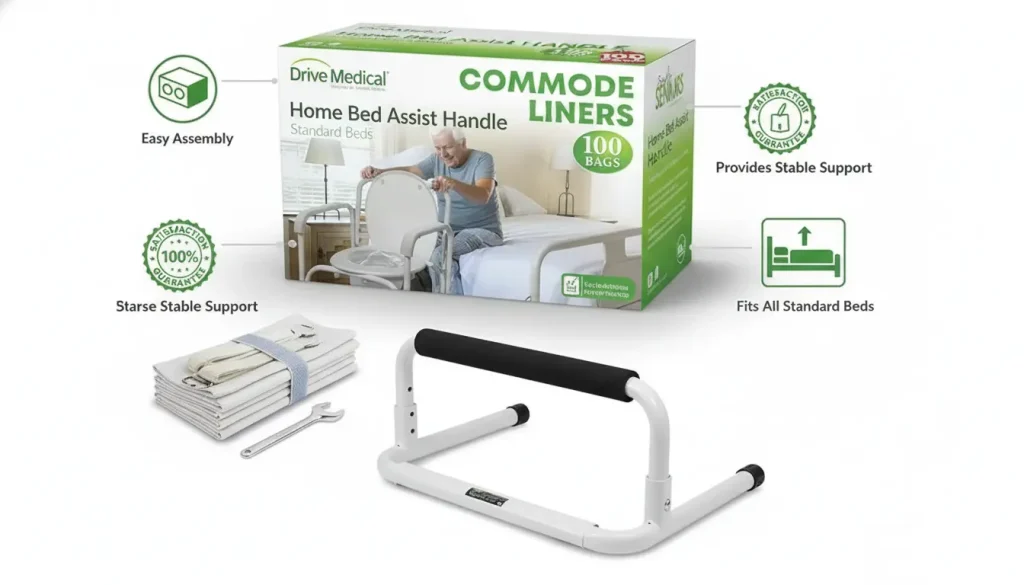
This compact rail works on most bed frames and box springs. It provides a sturdy grab point without taking up much space.
The padded handle feels comfortable in weak hands. Installation takes less than five minutes. Just slide the support base between the mattress and box spring.
The rail supports up to 300 pounds. It stands 16 inches tall, which suits most standard mattresses.
Best for: Seniors who need basic support for sitting up and transferring.
For Adjustable Beds: Stander EZ Adjust Bed Rail
This rail clamps directly to the bed frame. It works with adjustable bases, platform beds, and standard frames.
The telescoping design extends from 26 to 34 inches. You can adjust the height without tools. The rail folds down when not in use.
Dual safety straps add extra security. The foam grip remains comfortable during extended use.
Supports up to 300 pounds.
Best for: Homes with adjustable or platform beds.
For Fall Prevention: Vaunn Medical Adjustable Bed Assist Rail
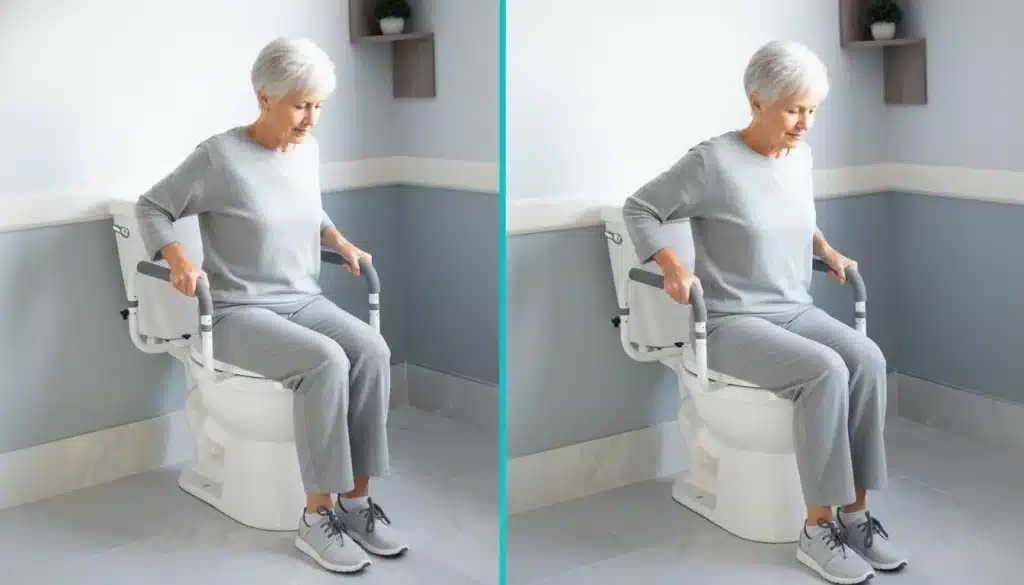
This full-length rail extends 20 inches above the mattress. The wide coverage helps prevent rolling out of bed.
The rail includes a non-slip base plate that slides under the mattress. Two support legs provide stability at multiple points.
You can adjust the height and angle. The rail folds flat for storage or travel.
Rated for 300 pounds.
Best for: Seniors at high risk of rolling out of bed during sleep.
For Heavy-Duty Support: Carex Health Brands Bed Rails
These rails support up to 400 pounds. The extra-wide base distributes weight evenly under the mattress.
Dual grab bars at different heights accommodate various needs. The powder-coated steel frame resists rust and wear.
Installation requires no tools. The rail fits beds up to 20 inches high.
Best for: Heavier users or those who apply significant pulling force.
For Travel: Able Life Bedside Extend-A-Rail

This portable rail weighs just seven pounds. It breaks down for transport and fits in a large bag.
The adjustable base works on most beds. The rail extends to 17 inches above the mattress. A built-in pouch holds phones, remotes, or glasses.
Supports 300 pounds despite the lightweight design.
Best for: Seniors who visit family or travel frequently.
How to Choose the Right Bed Rail
Assess Mobility Needs
Does the senior need help sitting up? Or do they need full-length fall prevention?
Assist rails work for those with mild weakness. Full rails suit seniors who move a lot during sleep or have cognitive issues.
Measure Your Bed
Note the mattress height, width, and frame type. Some rails don’t work with platform beds or adjustable bases.
Measure the space between the mattress and floor. Rails with legs need adequate clearance.
Consider the Room Layout
Will the rail block access to the other side of the bed? Does it interfere with nightstands or medical equipment?
Swing-down models offer more flexibility in tight spaces.
Check Installation Requirements
Some rails need no tools. Others require assembly or mounting hardware.
If you rent your home, choose non-permanent options. Avoid rails that require drilling or permanent brackets.
Think About Future Needs
Adjustable rails provide flexibility as abilities change. Buying a more versatile model now can save money later.
Installation and Safety Tips
Proper Placement
Position the rail where the senior naturally exits the bed. Most people prefer the side closest to the bathroom.
Leave enough room between the rail and wall. Hands and arms should move freely.
Secure Attachment
Follow the manufacturer’s instructions exactly. Tighten all clamps and straps. Double-check security before each use.
Replace worn straps or damaged parts immediately. Don’t use a rail that shifts or feels loose.
Regular Inspections
Check the rail weekly for loose connections. Look for cracks, rust, or bent metal. Test stability by applying pressure.
Clean the rail with mild soap and water. Dry thoroughly to prevent rust.
Educate Users
Show the senior how to grip the rail properly. Demonstrate how to sit up and stand safely.
Practice transfers during the day before using at night. Build confidence through repetition.
Combine with Other Safety Measures
Bed rails work best as part of a complete safety system. Add non-slip mats near the bed to prevent slipping when standing.
Use adequate lighting. Consider motion-activated night lights. Keep the path to the bathroom clear.
Additional adaptive tools can improve safety throughout the home.
Common Concerns About Bed Rails
Entrapment Risk
Older rail designs posed entrapment risks. Modern rails follow FDA guidelines to minimize gaps that could trap limbs.
Choose rails with proper gap sizing. Avoid homemade solutions or very old models.
Independence vs. Restraint
Some worry that rails restrict freedom. Quality rails enhance independence by providing support without confinement.
Swing-down models and assist rails don’t create barriers. They simply offer something to hold.
Compatibility with Bedding
Rails can interfere with fitted sheets or comforters. Look for low-profile models if this concerns you.
Some manufacturers sell bedding designed to work with rails. Standard sheets usually adjust with minor tucking.
Rental vs. Purchase
Medical supply stores rent bed rails for short-term needs. This makes sense after surgery or during recovery.
Buying makes more sense for long-term use. Quality rails last years with proper care.
When to Seek Professional Advice
Consult a doctor or occupational therapist if the senior:
- Falls frequently despite using a rail
- Has severe mobility limitations
- Requires extensive repositioning assistance
- Uses multiple medications that affect balance
These professionals can assess whether bed rails provide adequate support. They might recommend hospital beds or additional equipment.
Physical therapists can teach proper transfer techniques. This reduces injury risk and builds confidence.
Frequently Asked Questions
What is the safest bed rail for elderly adults?
Rails that meet FDA guidelines for gap spacing and attach securely to the bed frame. Look for models with 300-pound weight capacity, padded grips, and stable mounting systems. Full-length rails offer the most fall protection during sleep.
Can bed rails fit on adjustable beds?
Yes, but you need rails designed for adjustable frames. Standard rails that slip under the mattress may shift when the bed moves. Choose models with frame clamps or brackets. The Stander EZ Adjust works well on adjustable bases.
How do I stop a bed rail from sliding?
Check that the base extends far enough under the mattress. Add rubber shelf liner under the base for extra grip. Tighten all straps and clamps. Some rails include non-slip pads. Replace these if they wear out.
Are bed rails covered by Medicare?
Medicare Part B may cover bed rails if a doctor prescribes them as durable medical equipment. The senior must have a medical condition that makes the rail necessary. Rules vary by situation. Contact Medicare directly or speak with your doctor’s billing department.
What’s the difference between a bed rail and a grab bar?
Bed rails attach to the bed and provide support for sitting up, lying down, and transferring. Grab bars mount to walls and help with standing and walking. You can use both together. Grab bars near the bed offer extra support when moving around the room.
Do bed rails work with memory foam mattresses?
Most rails work fine with memory foam. The key is proper installation. Make sure the base extends far enough under the mattress. Heavier memory foam mattresses hold rails more securely. Test stability before regular use.
Can I use bed rails on both sides?
Yes, if space allows. Some seniors feel more secure with rails on both sides. This setup works well for those who alternate which side they exit. Make sure you can still access the bed easily for care and sheet changes.
How tall should a bed rail be?
Most rails extend 15 to 20 inches above the mattress. This height provides support without being difficult to reach. Taller rails offer more coverage for fall prevention. Shorter rails work better for those with limited shoulder mobility.
Conclusion
The right bed rail restores confidence at bedtime. Seniors gain independence. Families gain peace of mind.
Choose based on mobility needs, bed type, and safety features. Assist rails work for basic support. Full rails prevent falls during sleep. Swing-down models offer flexibility.
Look for sturdy construction, comfortable grips, and secure mounting. Test the rail thoroughly before regular use. Combine it with good lighting and clear pathways.
Bed rails form one part of a safe home environment. Regular use helps seniors maintain independence while reducing fall risk.
Ready to improve nighttime safety? View the top-rated bed rails on Amazon and find the model that fits your needs.