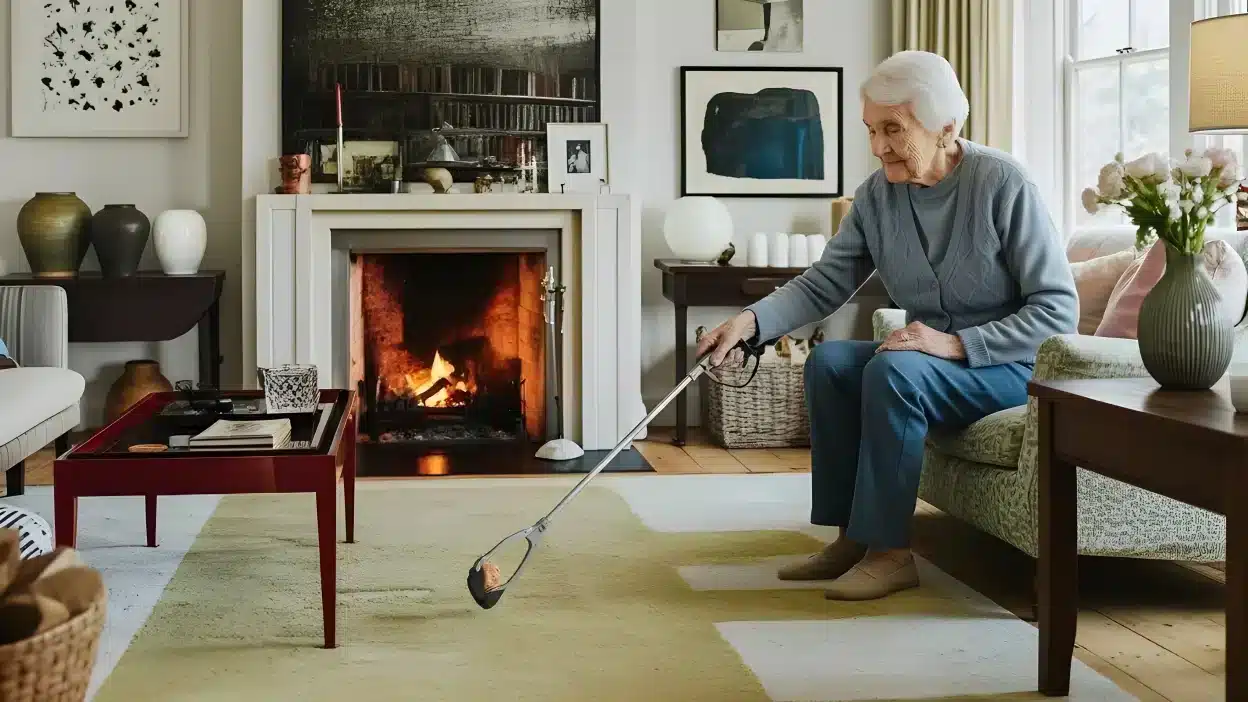
You drop your favorite magazine behind the couch. It slides under the coffee table. You bend down to grab it, and your back protests. Your knees ache. You wish you could reach it without the struggle.
A grabber tool for seniors solves this problem. These tools extend your reach by two to four feet. You can pick up objects from the floor, grab items from high shelves, and retrieve things from tight spaces. No bending required.
Many seniors face limited mobility, arthritis, or recovering from surgery. A reacher grabber for elderly users offers independence. You stay safe. You avoid painful movements. You handle daily tasks without asking for help.
Grabber tools are part of a wider group of senior grip tools designed to reduce strain on hands and joints. These tools help seniors maintain independence by making everyday tasks easier and safer.
This guide covers the best grabber tools available in 2026. We compare grip strength, handle comfort, weight capacity, and ease of use. You’ll learn which features matter most and which tools work best for specific needs.
Quick recommendation: Look for grabbers with rubberized jaws, ergonomic handles, and a weight capacity of at least two pounds. Most quality models cost between $15 and $30.
What Is a Grabber Tool and Who Needs One?
A grabber tool is a long pole with a trigger handle on one end and gripping jaws on the other. You squeeze the handle. The jaws close around an object. You release the handle. The jaws open.
Most grabbers extend 26 to 32 inches. Some reach up to 40 inches for taller users or higher shelves.
People who benefit from grabber tools include:
Seniors with arthritis. Painful joints make bending and reaching difficult. A grabber reduces strain on hands, knees, hips, and back.
Post-surgery patients. Hip or knee replacement patients cannot bend past 90 degrees. Grabbers help them dress, pick up dropped items, and maintain independence during recovery.
People with limited mobility. Wheelchair users or those with balance issues need tools that extend their reach without requiring movement.
Anyone with chronic back pain. Repeated bending worsens lower back problems. Grabbers eliminate the need to stoop.
The right tool depends on what you plan to grab. Light objects like clothing or paper require less grip strength. Heavier items like cans or bottles need stronger jaws and a sturdy frame.
Key Features to Look For in a Reacher Grabber for Elderly Users
Not all grabbers work the same. Some feel flimsy. Others hurt your hand after a few uses. The best reacher grabber elderly users choose includes these features:
Ergonomic Handle Design
Your hand should fit comfortably around the trigger. Look for soft rubber grips or contoured handles. Avoid hard plastic that digs into your palm.
Triggers come in two styles. Pistol-grip triggers require you to squeeze like a spray bottle. Full-hand triggers spread pressure across your entire palm. Full-hand triggers work better for people with weak grip strength or arthritis.
Jaw Strength and Material
Rubber-coated jaws grip smooth surfaces better than bare metal. They hold glass, plastic, and fabric without slipping.
Check the jaw width. Wide jaws pick up larger objects like shoes or bottles. Narrow jaws fit into tight spaces.
Magnetic tips add extra functionality. Some grabbers include magnets on the jaws to pick up metal objects like keys, coins, or paperclips.
Weight Capacity
Most grabbers hold one to five pounds. Basic models handle lightweight items like paper or clothing. Heavy-duty versions lift cans, tools, or small appliances.
Test the capacity if you plan to grab heavier objects. A weak grabber bends or breaks under pressure.
Length Options
Standard grabbers measure 26 to 32 inches. This length works for most daily tasks.
Longer grabbers (36 to 40 inches) help taller users or reach items on high shelves. Shorter grabbers (19 to 24 inches) fit better in cars or travel bags.
Match the length to your height and typical use. Too short means extra bending. Too long feels awkward and heavy.
Rotating or Fixed Head
Some grabbers rotate 90 degrees. The head swivels to pick up items at odd angles. This feature helps when grabbing objects behind furniture or in corners.
Fixed-head grabbers stay straight. They work fine for simple tasks like picking up items from the floor.
Folding Design
Folding grabbers collapse to half their length. They fit in purses, suitcases, or car glove compartments. The trade-off is durability. Folding joints can weaken over time.
Non-folding grabbers last longer but take up more storage space.
Best Reachers for Elderly (Top Grabber Tools for Seniors in 2026)
Here are the best options based on different needs and budgets.
Best Overall: Vive Reacher Grabber Tool
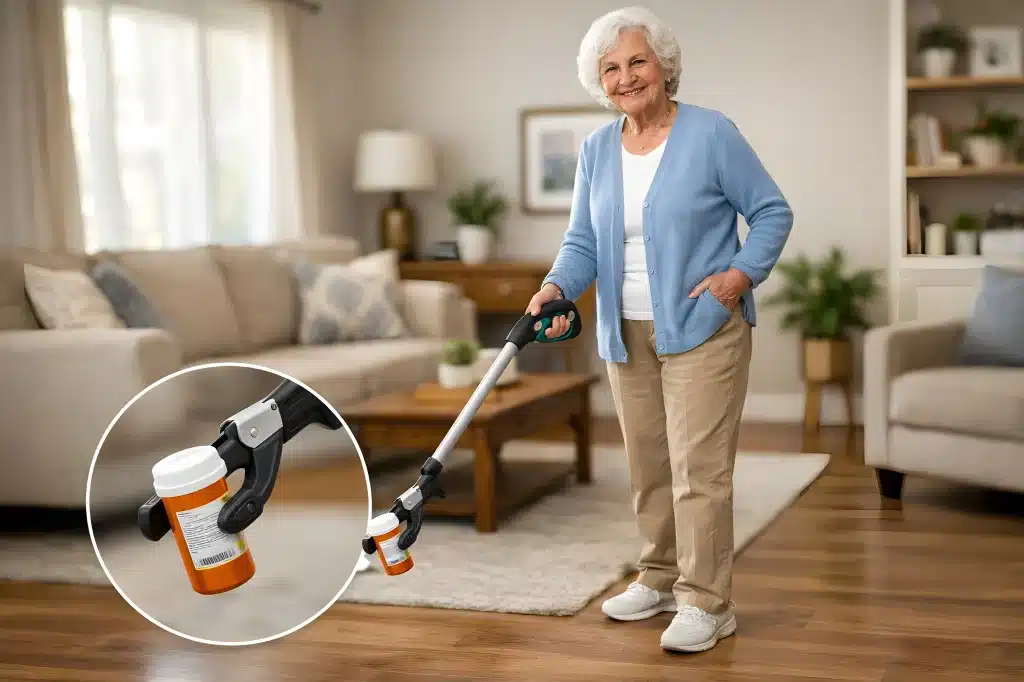
The Vive Reacher measures 32 inches and holds up to five pounds. It features a full-hand trigger that reduces finger strain. The rubberized jaws grip smooth and textured surfaces without slipping.
The rotating head turns 90 degrees vertically. You can grab items from awkward angles without twisting your wrist. The aluminum frame stays lightweight at 7.5 ounces but feels sturdy.
This model includes a magnetic tip for picking up small metal objects. The handle fits comfortably in small and large hands.
Best for seniors who need a reliable, all-purpose grabber.
Best for Arthritis: Ettore Grip’n Grab
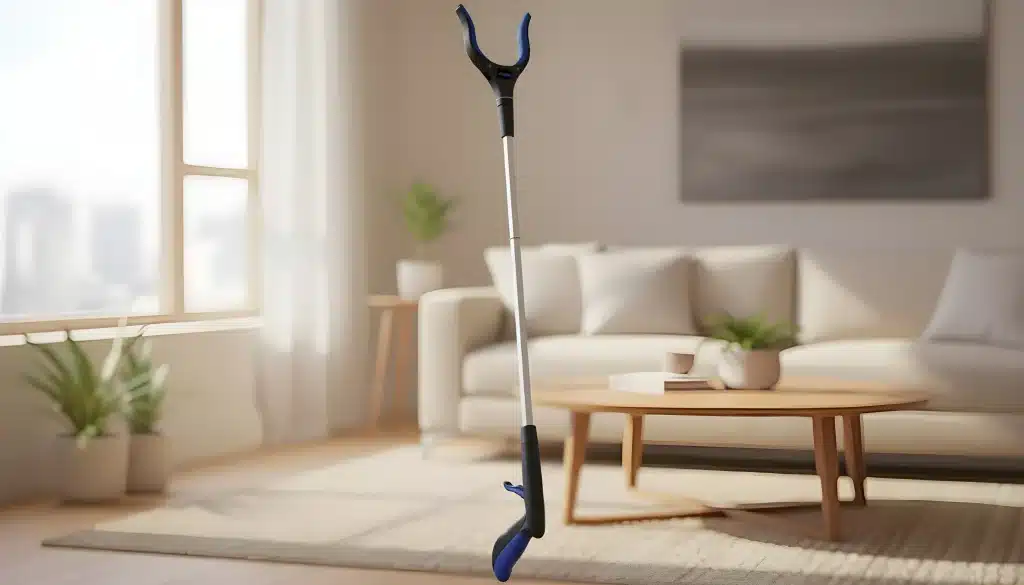
The Ettore Grip’n Grab uses a unique jaw design. It requires less hand strength to close the jaws fully. The trigger pull feels smooth and light.
At 31 inches, this grabber handles most daily tasks. The rubberized jaws measure 4.5 inches wide, perfect for grabbing bottles, cans, or clothing.
The ergonomic handle includes soft padding. Your hand stays comfortable during extended use.
Best for seniors with arthritis or weak grip strength.
Best Heavy-Duty: RMS Featherweight Reacher
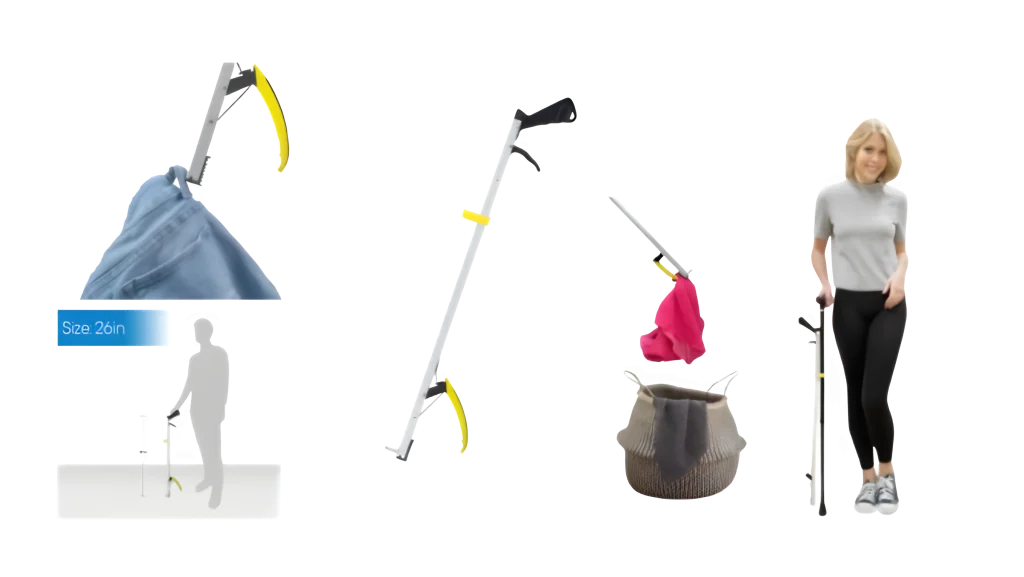
The RMS Featherweight holds up to five pounds. Despite its name, this grabber feels strong. The reinforced aluminum frame resists bending.
It measures 32 inches and includes a full-hand trigger. The jaws open 5 inches wide to grab larger objects like shoes or small boxes.
The rotating head locks into four positions: 0, 45, 90, and 135 degrees. You can pick up items from nearly any angle.
Best for seniors who need to grab heavier or bulkier items.
Best Folding Option: Sammons Preston Foldable Reacher
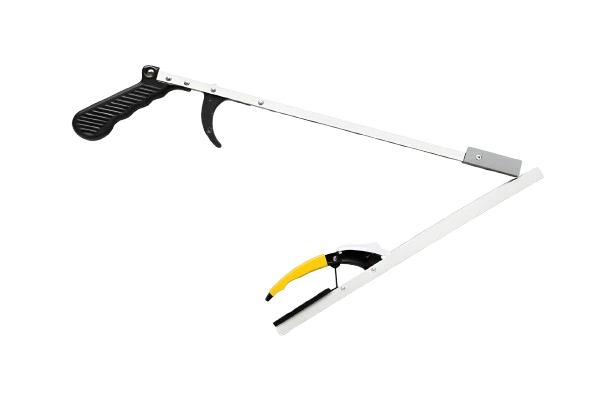
The Sammons Preston folds in half to 16 inches. It fits easily in a bag or car. The locking mechanism holds the grabber straight during use.
At 32 inches when extended, this model handles standard tasks. The rubber-lined jaws grip well. The weight capacity tops out at two pounds.
The handle includes a large trigger loop. You can operate it with your whole hand instead of just your fingers.
Best for seniors who travel or need a portable option.
Best Budget Pick: Drive Medical Deluxe Reacher
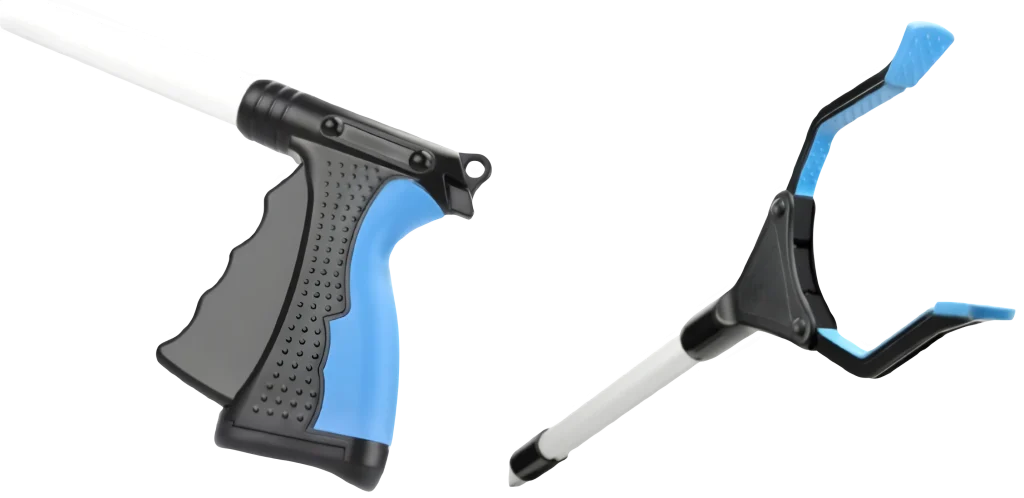
The Drive Medical Deluxe costs less than most competitors but performs well. It measures 26 inches, suitable for average-height users.
The jaws include rubber lining and a magnetic tip. The trigger feels light and easy to squeeze. Weight capacity reaches three pounds.
This grabber lacks a rotating head but works fine for basic tasks. The aluminum frame stays lightweight at 6 ounces.
Best for seniors on a tight budget who need a simple, functional grabber.
Best for Tall Users: Mobiclinic Extra-Long Reacher
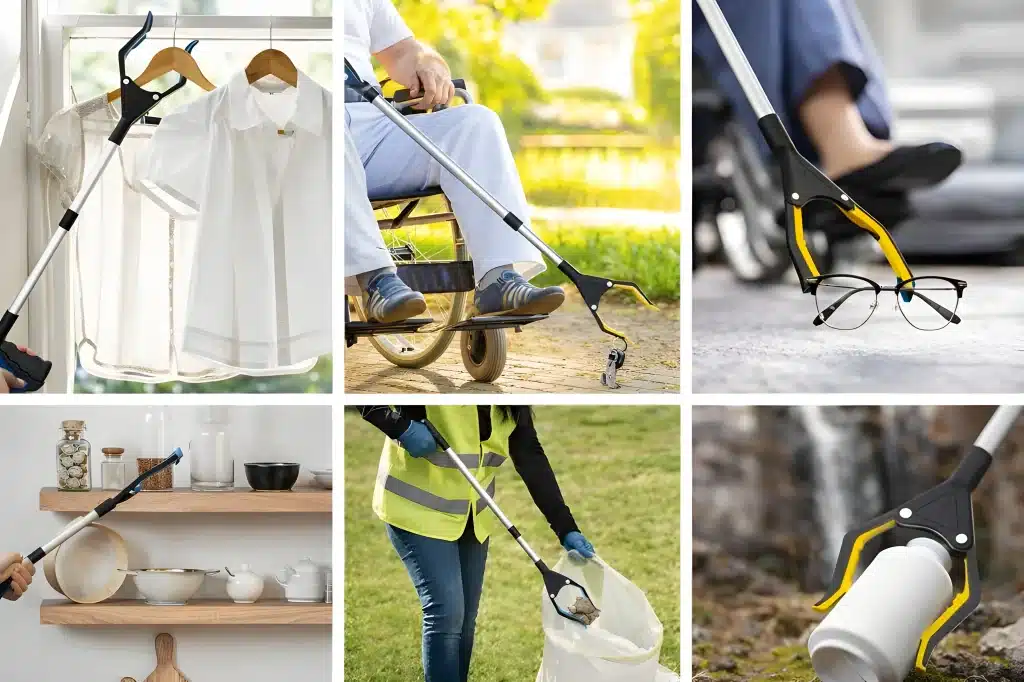
The Mobiclinic extends 40 inches. Tall users can reach high shelves or pick up items without bending as far.
The jaws open 5 inches wide and include rubber coating. The trigger uses a pistol-grip design. The frame stays sturdy despite the extra length.
This model weighs 10 ounces, slightly heavier than shorter options. The added weight improves stability when grabbing objects.
Best for seniors over 6 feet tall or those who need extra reach.
How to Use a Grabber Tool Safely
Grabber tools make life easier, but incorrect use can cause problems. Follow these tips to stay safe:
Test the grip before lifting. Squeeze the jaws around the object. Make sure it feels secure. Lift slowly. Stop if the object slips.
Avoid overloading. Check the weight capacity. Grabbing heavy objects can bend the frame or snap the jaws.
Keep the tool dry. Wet handles become slippery. Dry the grabber after cleaning.
Store it properly. Hang the grabber on a hook or place it in a closet. Avoid leaving it on the floor where someone could trip.
Inspect regularly. Check the jaws for cracks. Test the trigger mechanism. Replace the grabber if it feels loose or weak.
Use both hands for heavy items. Hold the grabber with one hand and steady the object with the other. This prevents drops.
Position yourself close to the object. Standing too far away reduces control. Move closer before grabbing.
Common Problems and Solutions
Even the best grabber tools come with challenges. Here’s how to solve common issues:
Problem: The jaws won’t grip smooth surfaces.
Solution: Look for a grabber with rubber-coated jaws. Some models include suction cups on the tips for better grip on glass or plastic.
Problem: The trigger hurts your hand.
Solution: Switch to a full-hand trigger. These spread pressure across your palm instead of concentrating it on your fingers. You can also add foam padding to existing handles.
Problem: The grabber feels too heavy after a few minutes.
Solution: Choose a lightweight model made from aluminum. If you already own a heavy grabber, take breaks between uses. Rest your arm every few items.
Problem: Objects slip out of the jaws while lifting.
Solution: Position the jaws around the object’s center of gravity. Grab items near the middle, not the edge. Squeeze the trigger fully before lifting.
Problem: The grabber doesn’t fit into tight spaces.
Solution: Use a grabber with a narrow head. Some models measure less than 2 inches wide at the jaws. Rotating heads also help reach awkward spots.
Maintenance Tips for Your Grabber Tool
A well-maintained grabber lasts years. Follow these steps to keep yours in good shape:
Clean the jaws weekly. Wipe them with a damp cloth. Remove dust, lint, or sticky residue. Dry thoroughly before storing.
Lubricate the joints. Apply a small amount of WD-40 or silicone spray to the trigger mechanism every few months. This keeps the movement smooth.
Tighten loose screws. Check the screws on the handle and jaws. Tighten them with a screwdriver if they feel loose.
Replace worn rubber pads. The rubber coating on the jaws wears down over time. Contact the manufacturer for replacement pads or buy a new grabber if pads aren’t available.
Avoid extreme temperatures. Don’t leave the grabber in a hot car or freezing garage. Heat can warp plastic handles. Cold can make rubber brittle.
Store vertically. Hang the grabber or lean it against a wall. Avoid storing it horizontally under heavy objects. This prevents bending.
Grabber Tools vs. Other Reaching Aids
Grabber tools aren’t the only option for extending your reach. Here’s how they compare to alternatives:
Step stools. Step stools help you reach high shelves but require climbing. Grabbers eliminate the need to step up, reducing fall risk. Use a grabber if balance is an issue.
Long-handled shoehorns. These help you put on shoes without bending but serve only one purpose. Grabbers handle shoes and dozens of other tasks. A grabber offers more versatility.
dressing aids. Dressing sticks pull on pants or shirts but lack gripping jaws. Grabbers pick up clothing and assist with dressing. Choose a grabber for multi-purpose use.
Sock aids. specifically help you put on socks. They work better than grabbers for this task. Use both tools if you need help dressing.
Grabbers excel at general reaching tasks. Specialized tools work better for specific needs. Many seniors use both.
Who Should Avoid Grabber Tools?
Grabber tools help most seniors, but some situations require caution:
Severe hand tremors. Tremors make it hard to control the jaws. Dropped objects can break or cause injury. Ask a caregiver for help instead.
Advanced dementia. Confusion about how to use the tool can lead to frustration or accidents. Supervised use is safer.
Very heavy objects. Grabbers aren’t meant for lifting furniture, large boxes, or items over five pounds. Use a dolly, cart, or ask for help.
Sharp or fragile items. Grabbers can drop or crush delicate objects. Handle breakables by hand or with padded gloves.
If you’re unsure whether a grabber suits your needs, talk to your doctor or occupational therapist. They can recommend the best tools for your situation.
Frequently Asked Questions
What’s the best length for a grabber tool?
Most seniors do well with a 26 to 32-inch grabber. This length handles floor pickups and overhead reaching without feeling too long. Taller users may prefer 36 to 40 inches. Shorter grabbers (19 to 24 inches) work for travel or car use.
Can grabber tools pick up coins or small items?
Yes, but you need a model with a magnetic tip. The magnet attaches to metal objects like keys, coins, or paperclips. Without a magnet, small items often slip through the jaws.
How much weight can a reacher grabber elderly users should choose hold?
Most quality grabbers hold two to five pounds. This covers everyday items like bottles, cans, clothing, books, and utensils. Heavy-duty models handle up to five pounds but cost more. Match the capacity to your typical needs.
Are folding grabbers as strong as non-folding ones?
Folding grabbers work well for light tasks but feel less sturdy. The folding joint can weaken over time. Non-folding grabbers last longer and handle heavier items. Choose folding versions only if portability is a priority.
Do I need a rotating head on my grabber?
Rotating heads help when picking up items in corners, behind furniture, or at odd angles. Fixed-head grabbers work fine for simple tasks like floor pickups. If you often reach into tight spaces, a rotating head adds convenience.
How do I clean a grabber tool?
Wipe the jaws with a damp cloth weekly. Use mild soap for sticky residue. Dry completely before storing. Avoid submerging the tool in water. The internal mechanism can rust.
Can a grabber tool help with arthritis jar opener tasks?
A grabber won’t twist a jar lid, but it can hold the jar steady while you use a dedicated jar opener. The jaws grip the jar body securely. Pair a grabber with a jar opener for better results.
What’s the difference between a reacher and a grabber?
The terms mean the same thing. Both refer to long-handled tools with gripping jaws. Some brands use “reacher” while others say “grabber.” The function is identical.
Conclusion
A grabber tool for seniors restores independence. You pick up dropped items, reach high shelves, and handle daily tasks without pain or risk. The right tool depends on your grip strength, height, and typical use.
Look for ergonomic handles, rubberized jaws, and a weight capacity that matches your needs. Models like the Vive Reacher offer excellent all-around performance. The Ettore Grip’n Grab works best for arthritis. The RMS Featherweight handles heavier items.
Test the trigger before buying. Make sure it feels comfortable. Check the jaw width and length. A good grabber should feel natural in your hand.
Proper maintenance keeps your grabber working for years. Clean the jaws regularly. Tighten loose screws. Store it safely.
Independence matters. A simple tool can make your day easier and safer.
Check availability on Amazon for the best grabber tools