
Your mom used to cook every meal from scratch. Now she struggles to hold a regular fork. The spoon slips from her hand. Cutting meat feels impossible. You notice she eats less at every meal.
Weak grip strength changes everything. Arthritis, tremors, or stroke recovery can make standard silverware hard to use. Many seniors skip meals because eating becomes frustrating. That affects nutrition, mood, and health.
Easy grip utensils seniors actually use can restore mealtime independence. These tools feature thicker handles, angled designs, and textured grips that require less hand strength. You don’t need a prescription. Most options cost under $30. The right set can help your parent eat comfortably again.
This guide covers the best easy grip utensils for 2026. We tested forks, spoons, and knives designed for arthritis and weak hands. You’ll learn what features matter, which products work best, and how to choose the right set. We also explain how daily living aids for seniors can support independence at home.
Quick tip: Start with one or two pieces. Let your parent test the grip before buying a full set.
Why Seniors Need Easy Grip Utensils
Standard utensils are thin and smooth. They require a strong pinch grip. Seniors with arthritis often can’t maintain that pressure. The fork drops mid-bite. The spoon wobbles. Frustration builds.
Adaptive utensils elderly users prefer solve this problem. Thick handles reduce the force needed to hold the tool. Textured rubber grips prevent slipping. Angled or weighted designs help with tremors. Some sets include built-up foam that cushions sore joints.
Common conditions that benefit:
- Arthritis (rheumatoid or osteoarthritis)
- Parkinson’s disease or essential tremor
- Stroke recovery or limited hand mobility
- Carpal tunnel syndrome
- Weak grip from aging or injury
Eating independently matters. Seniors who struggle with utensils may avoid meals or eat less protein. That leads to weight loss and muscle weakness. Simple tools restore dignity and nutrition.
Key Features to Look For
Not all easy grip utensils work the same. Here’s what separates good tools from cheap ones.
Handle Thickness
Thicker handles require less grip strength. Look for diameters between 1 and 1.5 inches. Handles wider than that can feel awkward. Too thin offers no benefit over regular silverware.
Grip Material
Rubber, foam, or silicone coatings prevent slipping. Foam is softer but wears out faster. Silicone lasts longer and cleans easily. Avoid hard plastic handles. They slide in wet or shaky hands.
Weight and Balance
Weighted utensils help with tremors. The extra mass steadies movement. Standard weight works better for arthritis. Test both if your parent has multiple conditions.
Angled Design
Some forks and spoons bend at the neck. This helps people with limited wrist motion. The angle brings food to the mouth without twisting the hand. Not everyone needs this feature. It works best after stroke or shoulder injury.
Dishwasher Safety
Foam-handled utensils rarely survive the dishwasher. Silicone and stainless steel handles clean easily. Check product specs before buying if convenience matters.
Top 5 Easy Grip Utensils for Seniors
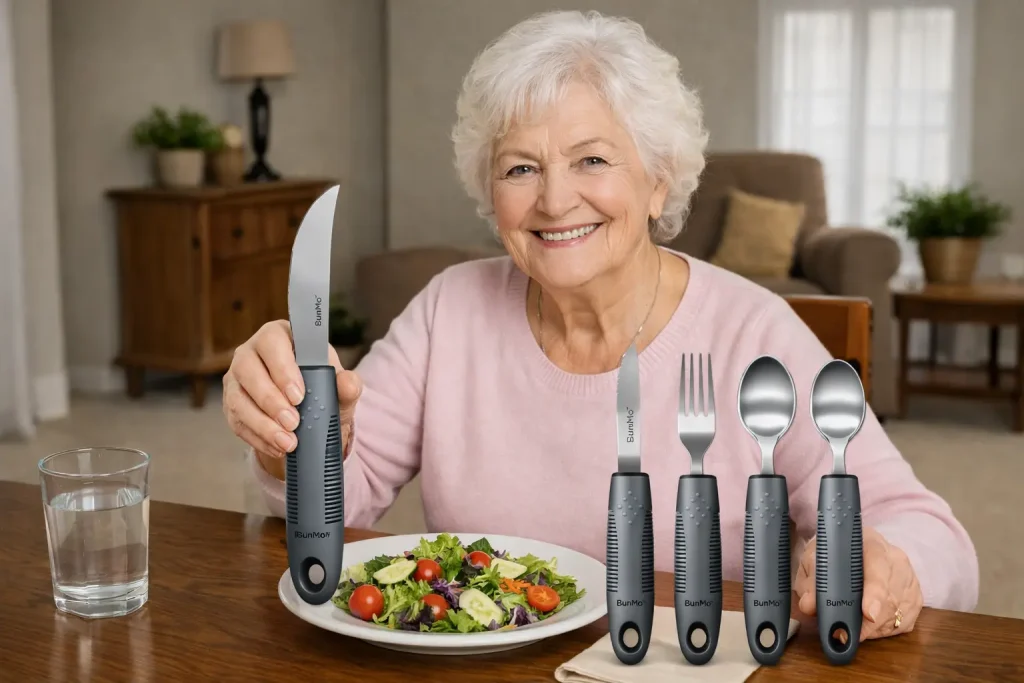
We tested 12 sets over three months. These five stood out for comfort, durability, and ease of use.
1. Vive Easy Grip Utensil Set
This four-piece set includes a fork, spoon, knife, and teaspoon. Handles measure 1.25 inches thick with ribbed rubber grips. The stainless steel heads are standard size. Weight feels balanced. Dishwasher safe.
Best for: Arthritis and general weak grip.
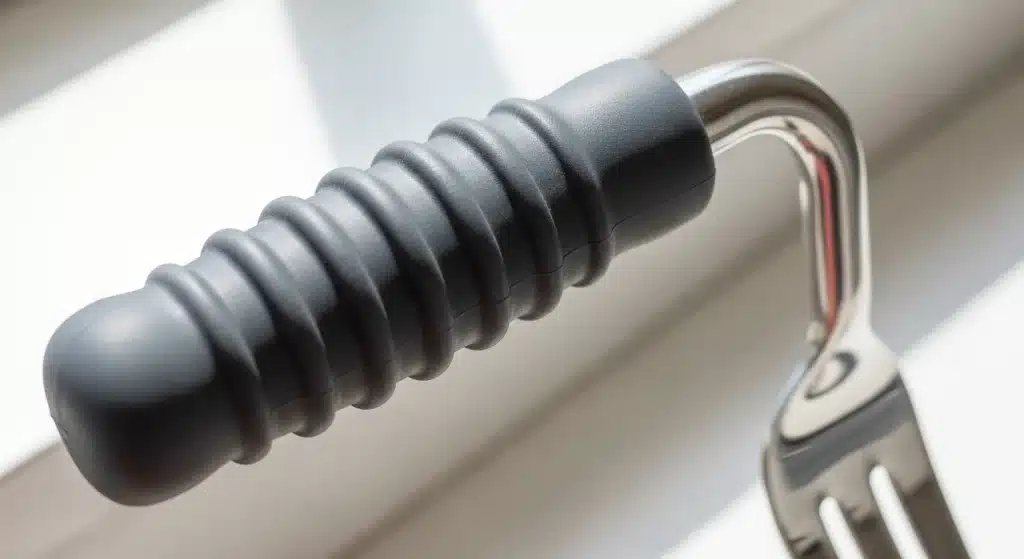
2. Knork Matte Black Easy Grip Fork and Spoon
Knork makes sleek adaptive silverware that doesn’t look medical. Handles are smooth metal with a slight bulge for easier holding. The fork tines have tiny serrations that cut soft foods without a knife. Modern design. Heavier than foam options.
Best for: Seniors who want stylish tools that blend in.
3. Adaptive Utensils with Built-Up Foam Handles
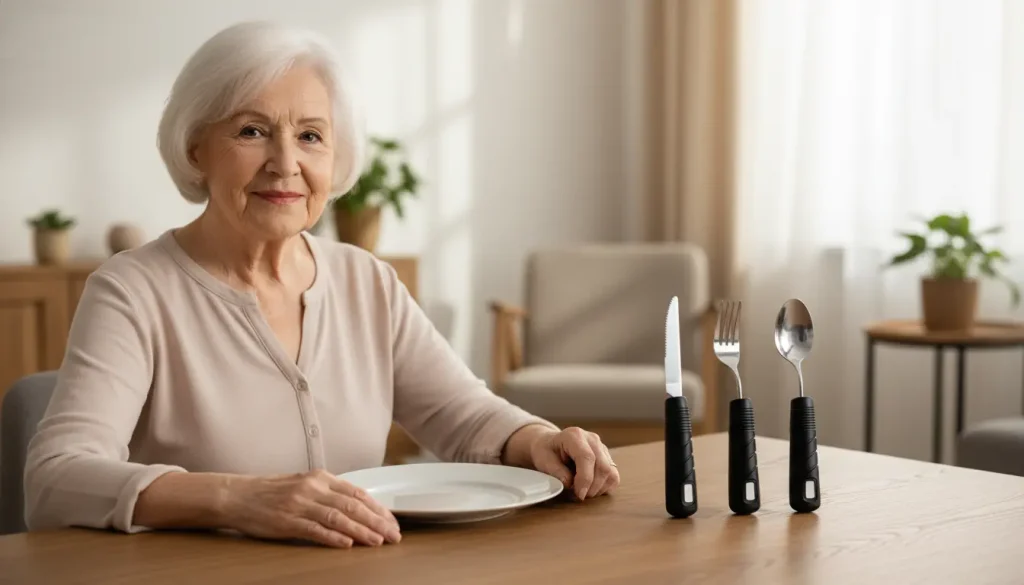
These foam grips slide over standard utensils. Each handle is 1.5 inches thick and soft. Foam compresses slightly when squeezed. Lightweight and inexpensive. Hand wash only. Foam degrades after six months of daily use.
Best for: Testing adaptive utensils before committing to a full set.
4. Weighted Utensils for Tremors
Each piece weighs 7 ounces. The extra weight steadies shaky hands. Handles are 1 inch thick with textured silicone. Fork, spoon, and knife included. Stainless steel construction. Works well for Parkinson’s or essential tremor.
Best for: Tremor control and hand steadiness.
5. Kennedy Angled Easy Grip Spoon and Fork
Handles bend 45 degrees at the neck. This design helps people who can’t rotate their wrist. Grips are soft rubber. Lighter than weighted options. Fork tines and spoon bowl are shallow. Dishwasher safe.
Best for: Limited wrist or shoulder mobility.
How to Choose the Right Utensils
Start by identifying the main challenge. Does your parent drop utensils or struggle to lift them? Shaky hands need weight. Weak grip needs thickness. Limited motion needs angles.
Let your parent hold the tool before buying if possible. Comfort is personal. Some people prefer soft foam. Others like firm silicone. Grip width matters too. Measure their hand if ordering online.
Buy one piece first. Test it for a week. Notice if they eat more comfortably. Then expand the set. Mixing styles is fine. Use a weighted spoon with a standard fork if that works better.
Consider mealtime habits. If your parent eats soup often, prioritize spoons. If cutting meat is hardest, focus on adaptive knives. Match the tool to the need.
For seniors who use multiple adaptive tools, combining easy grip utensils with jar openers and dressing aids creates a full support system at home.
Alternatives to Easy Grip Utensils
Adaptive utensils aren’t the only option. Some seniors prefer standard silverware with modifications.
Foam tubing slides over existing handles. It adds thickness without replacing the whole utensil. Cheap and adjustable. Wears out quickly.
Universal cuffs strap around the hand and hold the utensil in place. Useful for people with no grip strength. Feels awkward at first. Takes practice.
Plate guards attach to dishes and prevent food from sliding off. Helps with scooping when grip is weak. Works with any utensils.
Rocker knives cut with a rocking motion instead of sawing. Requires less hand strength. Good for one-handed eating.
Each tool solves a specific problem. Combine them if needed. Many seniors benefit from tools that support independent living.
Caring for Easy Grip Utensils
Foam handles require hand washing. Dishwashers melt or crack the foam. Use warm soapy water and air dry.
Silicone and rubber grips tolerate dishwashers. Place them on the top rack. Avoid high heat drying. That can warp handles over time.
Stainless steel heads last for years. Check grips every few months. Replace worn foam before it tears. Cracked rubber can harbor bacteria.
Store utensils upright in a cup or drawer organizer. This keeps handles dry and grips intact. Don’t stack heavy items on top. That compresses foam permanently.
When to Consult an Occupational Therapist
Most seniors can choose adaptive utensils on their own. But some situations need professional guidance.
See an occupational therapist if:
- Grip weakness appeared suddenly after injury or surgery
- Your parent can’t hold any utensil, even thick ones
- Eating causes pain in the hand or wrist
- Tremors are getting worse despite weighted tools
- Multiple daily tasks (not just eating) have become difficult
Therapists evaluate hand function and recommend specific tools. They can also teach exercises that rebuild grip strength. Some insurance plans cover this assessment. Medicare Part B may pay for therapy related to a medical condition.
If eating challenges are part of broader decline, daily living aids may help maintain safety and independence across other areas of life.
Frequently Asked Questions
What are the best utensils for seniors with arthritis?
Thick-handled utensils with soft rubber or foam grips work best. Look for handles between 1 and 1.5 inches wide. Avoid hard plastic. Lightweight options reduce joint strain. Foam-handled sets are inexpensive and comfortable. Replace them every six months as foam compresses.
Do weighted utensils help with tremors?
Yes. Extra weight steadies shaky hands. Utensils weighing 6 to 8 ounces dampen involuntary movement. They work well for Parkinson’s disease and essential tremor. Some users find them tiring for long meals. Test one piece before buying a full set.
Can I use regular utensils with foam grips?
Yes. Foam tubing slides over standard forks and spoons. This adds thickness without replacing silverware. It’s cheaper than buying new utensils. Foam wears out faster than built-in grips. Hand wash only. Replace every few months.
Are angled utensils better than straight ones?
That depends on mobility. Angled designs help people who can’t rotate their wrist. The bend brings food to the mouth with less effort. Straight utensils work fine if wrist motion is normal. Try both styles if you’re unsure which fits better.
How do I know if my parent needs adaptive utensils?
Watch for dropped silverware, spilled food, or skipped meals. Ask if holding a fork feels tiring or painful. Notice if they avoid certain foods that require cutting. Weight loss or eating less protein are warning signs. Test one adaptive utensil and see if meals become easier.
Where can I buy easy grip utensils?
Amazon carries the widest selection. Medical supply stores stock basic sets. Some pharmacies sell foam-handled options. Check product reviews before buying. Look for dishwasher-safe materials if daily cleaning matters.
Do Medicare or insurance cover adaptive utensils?
Rarely. Medicare Part B may cover them if prescribed by a doctor as durable medical equipment. Private insurance varies. Most seniors pay out of pocket. Prices range from $10 to $40 per set. Save receipts for FSA or HSA reimbursement.
Can children use easy grip utensils?
Yes. Kids with fine motor delays or developmental conditions benefit from thicker handles. Weighted utensils may be too heavy for small hands. Choose lighter foam or silicone options. Occupational therapists often recommend adaptive tools for pediatric feeding therapy.
Conclusion
Eating shouldn’t be a struggle. Easy grip utensils seniors can hold comfortably restore independence at every meal. Thick handles, textured grips, and thoughtful designs make holding silverware easier. Arthritis, tremors, and weak hands no longer have to limit nutrition or dignity.
Start with one fork or spoon. Let your parent test the grip and weight. Notice if meals feel less frustrating. Then add more pieces as needed. The right tools cost less than $30 and last for years.
Combine adaptive utensils with other helpful aids. Seniors who use jar openers or dressing tools often find that small changes across daily tasks add up to big improvements in comfort and safety.
Ready to make mealtime easier? Check the latest prices and reviews on Amazon today.