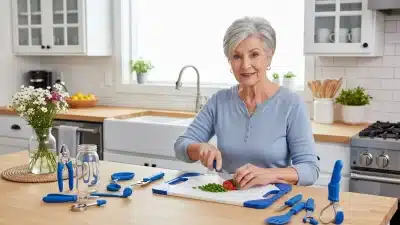
Margaret used to love choosing her outfits each morning. Then arthritis made buttons impossible to grip. Her daughter noticed she wore the same elastic-waist pants every day. Not because she liked them, but because they were the only thing she could manage alone.
Getting dressed shouldn’t feel like a test you might fail. When your fingers don’t bend the way they used to, or bending down makes you dizzy, simple tools can give you back your morning routine. This guide covers dressing aids for seniors that help with buttons, zippers, socks, and shoes. We tested tools for different needs, from mild stiffness to severe grip loss.
Quick Take: Button hooks work best for arthritis. Sock aids help people who can’t bend. Elastic shoelaces skip the tying step completely. Each tool targets one specific problem, so you only buy what you need.
Why Dressing Gets Harder with Age
Your hands lose about 20% of their grip strength between age 60 and 80. Tendons stiffen. Joints swell. Small buttons become tiny enemies.
Balance changes too. Standing on one leg to put on pants gets risky. Bending to tie shoes can make you lightheaded. Even pulling a shirt over your head takes more energy than it used to.
These changes are normal. They don’t mean you need help with everything. They just mean you need the right tools for the parts that got harder.
Types of Dressing Aids That Actually Help
Button Hooks and Zipper Pulls
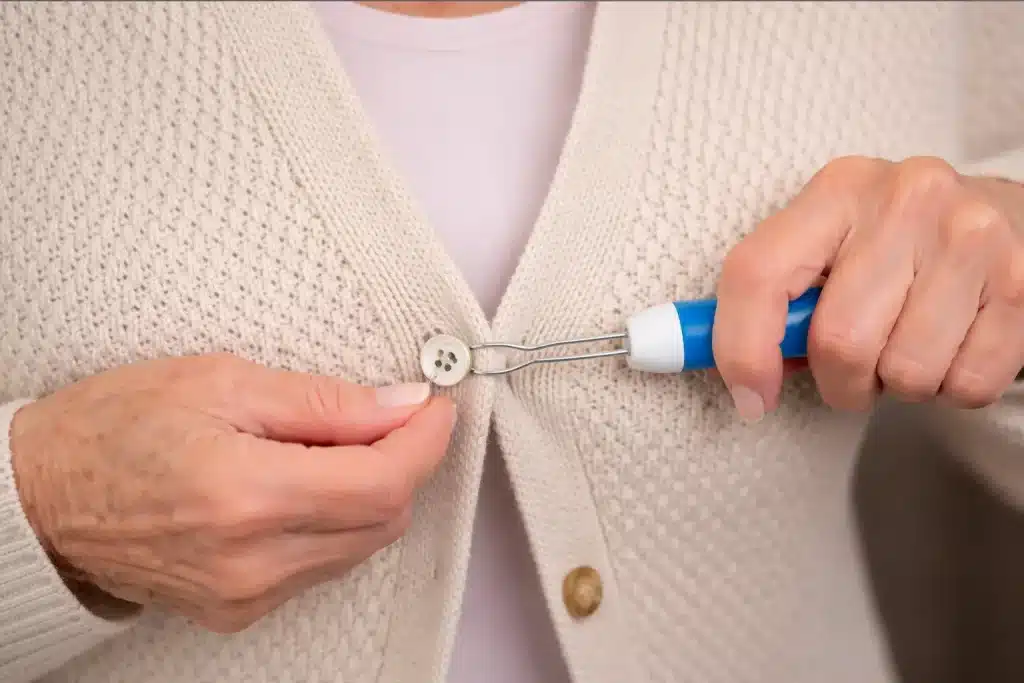
A button hook does one job: it grabs the button and pulls it through the hole so your fingers don’t have to pinch. Most have thick handles that are easier to hold than a tiny button.
Zipper pulls attach to your existing zipper tabs. They give you a loop or handle big enough to grip with a closed fist. No more fingernail-breaking tugs on a coat zipper.
Who needs these: People with arthritis, weak grip, or numbness in their fingertips.
If buttons are your main struggle, tools designed specifically for that problem offer specialized options with ergonomic grips and extended handles.
Sock Aids
A sock aid is a curved plastic frame. You slide your sock onto the frame, lower it to the floor, then slide your foot in. The sock rolls off the frame and onto your foot. You never bend past your knee.
Some have rope handles. Others use rigid handles. The rope style packs flat for travel. The rigid style gives you more control if your hands shake.
Who needs these: Anyone who can’t reach their feet, people with hip replacements, or those with balance issues. Specific sock aid recommendations can help you choose the right style.
Dressing Sticks and Reachers
A dressing stick is a long pole with hooks on the ends. You use it to pull up pants, pull shirts over your shoulders, or grab items you dropped.
Reachers work the same way, but they have a squeeze-grip trigger that opens and closes a claw. They pick up socks, pull blankets, or grab a sweater from a high shelf.
Who needs these: People with limited shoulder mobility, anyone recovering from surgery, or seniors who need to avoid twisting and bending. If you need help with other reaching tasks around the house, reaching tools extend your range for daily chores.
Elastic Shoelaces and Long Shoehorns
Elastic shoelaces turn any shoe into a slip-on. You tie them once, then the laces stretch when you push your foot in. Your shoes stay snug but you never tie them again.
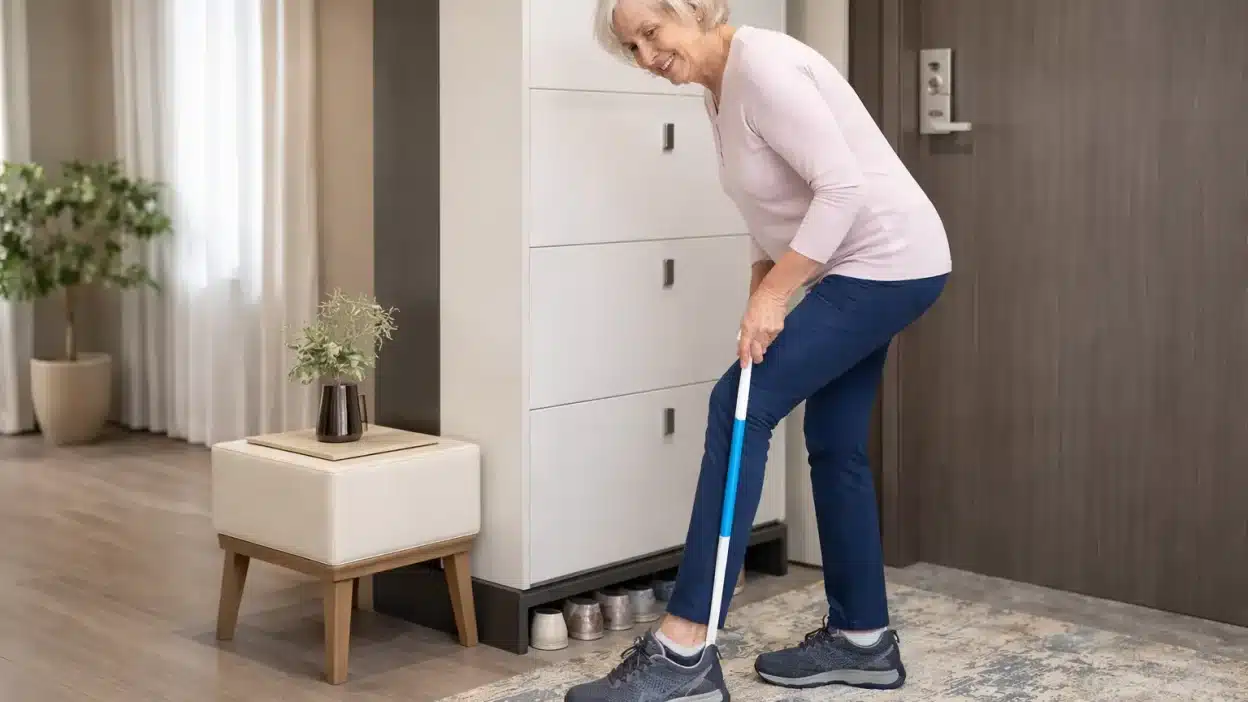
Long shoehorns let you slide into shoes without bending. The best ones are 24 inches or longer with a padded handle.
Who needs these: People who can’t bend to tie shoes, anyone with Parkinson’s tremors, or seniors who want to put shoes on while sitting.
Features That Make Dressing Aids Work Better
Handle Design
Thick foam grips reduce the force you need to hold the tool. Textured rubber stops your hand from slipping. Avoid thin plastic handles if your hands sweat or if you have senior clothing aids that you’ll use daily.
Loops at the end of handles let you hang the tool or slip your wrist through for a more secure hold.
Length Options
Longer tools mean less bending. A 12-inch shoehorn makes you lean forward. A 30-inch shoehorn lets you sit upright.
But longer isn’t always better. A 36-inch dressing stick can be awkward in a small bathroom. Match the length to your flexibility and your space.
Material Durability
Metal tools last longer but weigh more. Plastic tools are lighter but can crack if you drop them. Wood looks nice but can splinter over time.
For daily use, reinforced plastic offers the best balance. For occasional use, basic plastic works fine.
How to Choose the Right Dressing Aid
Start with your biggest problem. If mornings take forever because of buttons, get a button hook first. If you can’t put on socks, get a sock aid. Don’t buy a full kit until you know which tools you’ll actually use.
Test the weight in your hand if possible. A tool that feels heavy in the store will feel heavier after you’ve used it for five minutes.
Check the return policy. Some tools work great for one person and feel useless to another. You might need to try two styles before you find the right one.
Top Dressing Aids for Different Needs
Best for Arthritis: RMS Deluxe Dressing Stick Kit
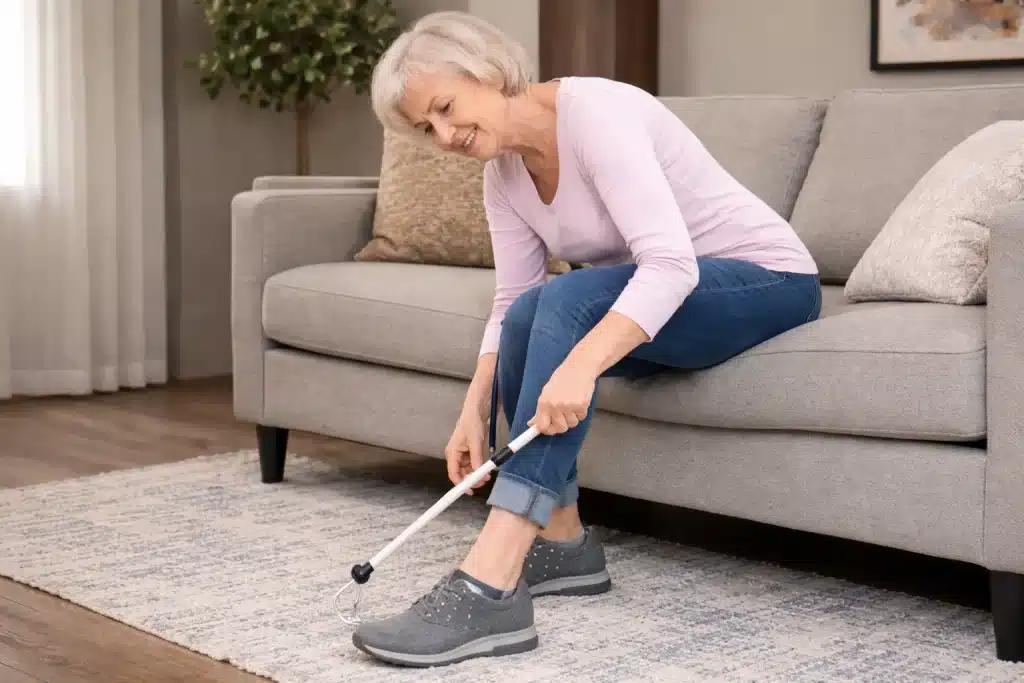
This kit includes a button hook, sock aid, zipper pull, and 24-inch shoehorn. All the handles have thick foam grips. The button hook has a wire loop that catches buttons easily, even if your aim is off.
The sock aid uses a rigid frame, which is easier to control than rope handles if your hands shake. The shoehorn has a notch at the top that helps you pull off shoes too.
Good for: Moderate to severe arthritis, limited finger dexterity, and people who need multiple tools.
Best Sock Aid: Vive Sock Aid Kit
The frame is wider than most sock aids, so it fits thick diabetic socks and compression socks. It comes with two rope handles, each 36 inches long. You can use both hands to pull or hold one handle and use your other hand for balance.
The plastic is flexible but strong. It bends to fit your foot shape but doesn’t crack.
Good for: People who wear compression socks, anyone recovering from hip or knee surgery, and seniors with limited flexibility.
Best Button Hook: Kinsman Enterprises Button Hook
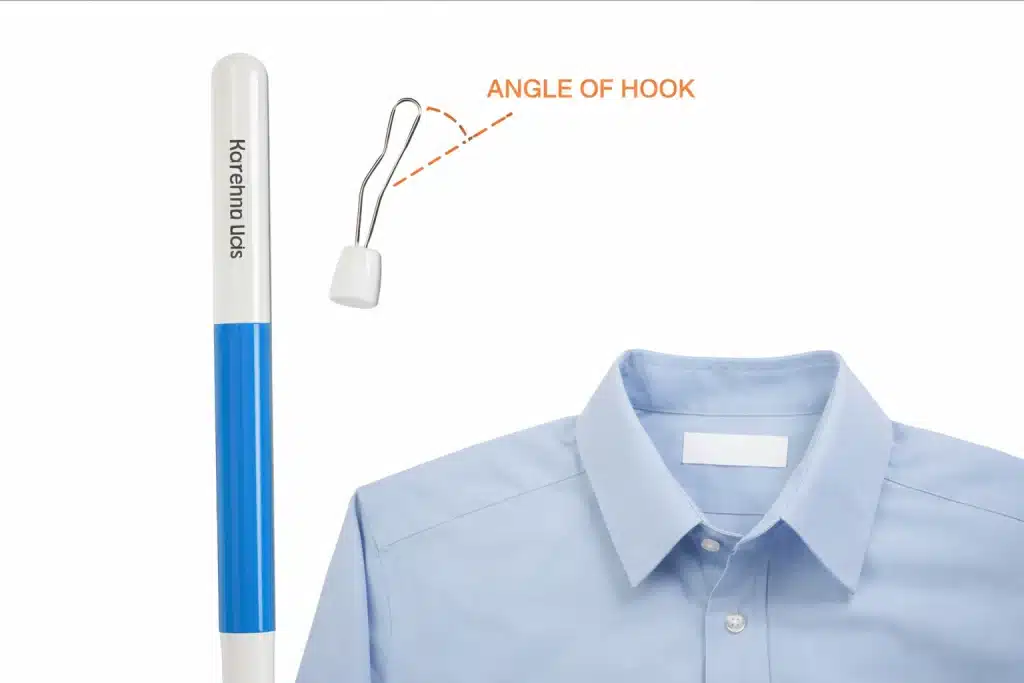
This tool has one job and does it well. The hook is smooth stainless steel that won’t snag fabric. The handle is 5 inches long and covered in soft rubber. It’s thick enough to grip with a closed fist.
The hook angle is perfect for dress shirts and cardigans. It struggles with very small buttons on blouses, but most people find it works for 90% of their clothes.
Good for: Mild to moderate arthritis, people who dress independently but need help with buttons.
Best Shoehorn: Ettore 31-Inch Stainless Steel Shoehorn
This shoehorn is restaurant-grade stainless steel. It will outlast you. The handle is a loop at the top, so you can hang it on a hook or slip your wrist through it.
At 31 inches, you can use it while sitting in a chair or standing upright. The metal is rigid, so it doesn’t flex when you push your foot in. That rigidity matters if you have swollen feet or tight shoes.
Good for: Daily use, people who wear shoes with firm heels, and anyone tired of cheap plastic shoehorns that snap.
Best Zipper Pull: Brix Zipper Pulls (3-Pack)
These are small metal rings that attach to any zipper. You loop them through the zipper hole and they stay attached. Each ring is about 2 inches wide, big enough to hook with one finger or a thumb.
They come in a three-pack, so you can put them on your winter coat, your favorite jacket, and your jeans. They’re thin enough that they don’t dangle or get in the way.
Good for: People with weak pinch grip, anyone who wears coats with small zipper tabs.
Best Elastic Shoelaces: Caterpy No-Tie Laces
These laces have small bumps along their length. The bumps lock into your shoe’s eyelets and keep the tension even. Your shoes stay snug all day without sliding loose.
They stretch about 30% when you push your foot in, then bounce back. You tie them once during setup, then never again. They come in 12 colors, so you can match your shoes.
Good for: People who can’t tie shoes, anyone with tremors, and seniors who want to turn regular shoes into slip-ons.
How to Use Dressing Aids Without Frustration
Button Hooks
Put the shirt on first and button from the bottom up. Push the hook through the buttonhole from the back of the fabric. Catch the button with the hook, then pull it back through the hole. The button slides through and the fabric stays flat.
Practice on a shirt that’s laying on a table before you try it while wearing the shirt. The motion feels awkward at first but becomes automatic after a week.
Sock Aids
Slide the sock onto the aid with the toe pointing down. Make sure the heel is centered. Lower the aid to the floor and step into the sock opening. Pull the handles toward you. The sock rolls off the aid and onto your foot.
If the sock twists, take it off and start over. A twisted sock will bunch inside your shoe.
Dressing Sticks
Hook the stick onto the waistband of your pants. Pull up without twisting your back. Move the hook to a new spot on the waistband and pull again. Three or four pulls get your pants up to your hips.
For shirts, hook the collar and pull the shirt over your head. Then use the stick to adjust the sleeves.
Shoehorns
Sit down. Place the shoehorn inside the back of your shoe. Hold the shoe steady with one hand. Push your foot down into the shoe while holding the shoehorn handle. Slide the shoehorn out once your heel is in.
Don’t try to use a shoehorn while standing unless you have something sturdy to hold onto.
Common Problems and Fixes
The button hook keeps slipping off the button.
You’re pulling too fast. Slow down and make sure the button is fully inside the hook before you pull. Some hooks have a deeper curve that holds buttons better.
The sock aid frame is too narrow for my socks.
Buy a wide-frame sock aid. Standard frames fit dress socks. Wide frames fit athletic socks and compression socks. Check the width measurement before you buy.
The dressing stick hook scratches my skin.
Wrap the hook ends with medical tape or use a stick with rubber-coated hooks. Metal hooks work better on fabric, but coated hooks are gentler on skin.
The shoehorn bends when I push my foot in.
You need a rigid shoehorn, not a flexible one. Stainless steel and thick plastic hold their shape under pressure. Thin plastic shoehorns are fine for loose shoes but fail with snug shoes.
The elastic laces are too loose.
Tighten them by pulling the laces through the eyelets until the shoe fits snugly, then tie them. The elastic will maintain that tension. If they’re still loose, the laces might be worn out and need replacing.
When to Add More Tools
Start with one or two tools for your biggest challenges. Use them for a month. If they help, add another tool for the next problem on your list.
Don’t buy a full kit unless you know you’ll use every piece. Unused tools clutter your space and waste money.
Some people only need one tool. Others build a collection over time as their needs change. Both approaches work.
Frequently Asked Questions
What is the easiest dressing aid for seniors to use?
Elastic shoelaces are the easiest because you set them up once and they work automatically after that. You don’t need to learn a new skill or change your routine. Button hooks take more practice but become easy after a few days of use.
Can dressing aids help someone with Parkinson’s disease?
Yes. Elastic shoelaces remove the need for fine motor control. Zipper pulls give you a larger target to grip. Sock aids eliminate bending, which helps with balance. Choose tools with thick handles to reduce tremor impact.
Are dressing aids covered by insurance?
Sometimes. Medicare Part B may cover dressing aids if your doctor writes a prescription and the aids are considered medically necessary. Check with your insurance provider. Many aids cost less than your copay, so paying out of pocket is often simpler.
How long do dressing aids last?
Metal and rigid plastic tools last years with daily use. Elastic laces last 6 to 12 months before they lose tension. Foam grips wear out faster and may need replacing every year. Sock aid frames rarely break but the handles can fray.
Can I use a dressing stick for other tasks?
Yes. People use dressing sticks to reach light switches, close curtains, and pick up items from the floor. A dressing stick and a reacher do similar jobs. Buy based on which tasks you do most often.
Do dressing aids work for someone with limited vision?
Tools with high-contrast colors and textured grips work better for low vision. Button hooks can be tricky because you need to see the buttonhole. Sock aids work well because the steps are tactile. Elastic shoelaces eliminate a vision-dependent task entirely.
What if I feel embarrassed using dressing aids?
Using tools is smart, not shameful. Carpenters use hammers. Chefs use mixers. You use aids that match your current abilities. Independence matters more than doing things the hard way. Most people feel relieved once they try the tools and realize mornings are easier.
Should I get a dressing aid kit or buy individual tools?
Buy individual tools if you know exactly what you need. Kits save money if you need three or more items. Some kits include tools you won’t use, so check the contents list before buying.
Conclusion
Dressing aids for seniors give you back the parts of your routine that got hard. A button hook takes 30 seconds to use and saves 10 minutes of frustration. A sock aid means you don’t need help with something as basic as getting dressed.
You don’t need every tool. You need the ones that fix your specific problems. Start with one. See if it helps. Add more as you figure out what works.
Getting dressed should be the easiest part of your day. These tools make that possible again.
View dressing aid options on Amazon and choose the ones that match your needs.