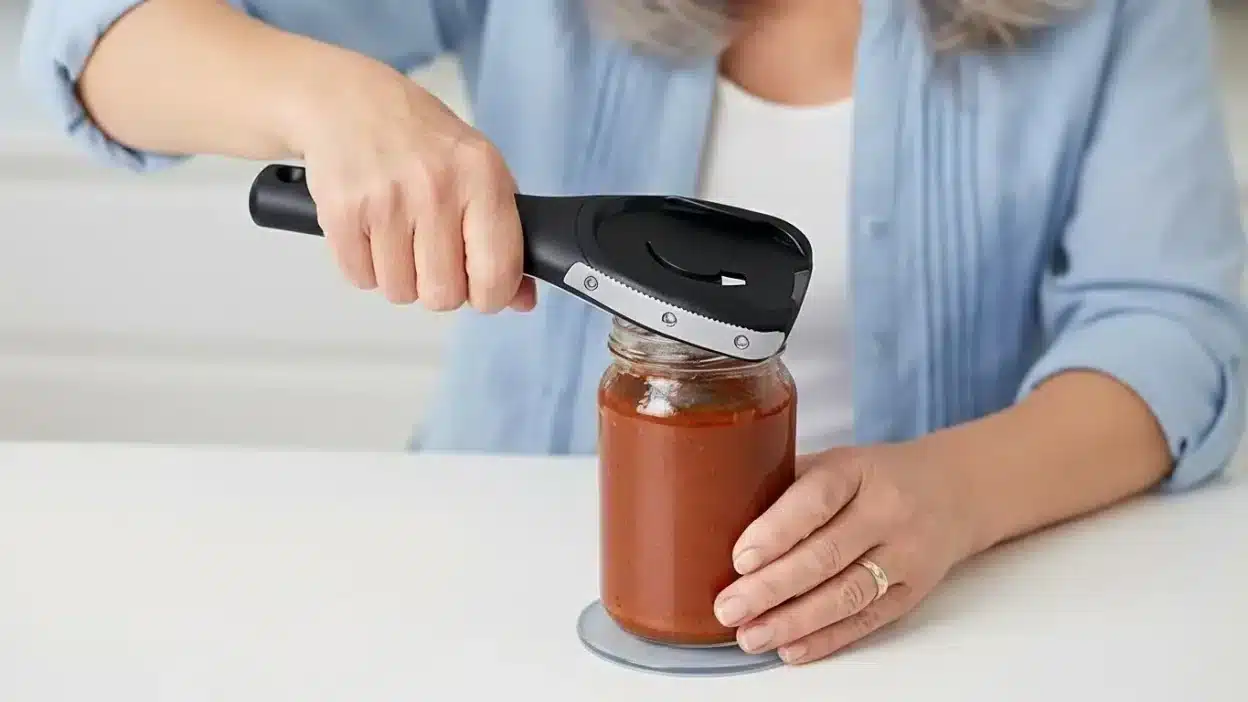
You reach for the pickle jar. You twist. Nothing happens. You try again, this time with a dish towel for better grip. Still nothing. Your hands ache, and that jar stays sealed tight.
This scene plays out in kitchens across the country every single day. Arthritis, weak grip strength, and aging hands make simple tasks feel impossible. But here’s the good news: the right jar opener for seniors can bring back your independence in the kitchen without pain or struggle.
We tested dozens of jar openers to find the ones that actually work for weak hands. Some require zero grip strength. Others work on lids of any size. A few even open cans and bottle caps too. Tools that help with daily tasks
Jar openers are one of the most useful daily living aids for elderly people who struggle with weak hands or arthritis. The right tool reduces strain on joints and helps seniors stay independent in the kitchen.
This guide shows you exactly which jar openers work best for different needs, from manual grippers to electric options that do all the work for you.
Why Regular Jar Openers Don’t Work for Weak Hands
Standard jar openers sold in grocery stores assume you have decent hand strength. They ask you to squeeze, twist, and apply force. That’s exactly what arthritic hands can’t do.
Most basic rubber grips just increase friction. You still need strong hands to turn the lid. The rubber itself can be too thick for small hands to grasp comfortably.
Arthritis affects about 58.5 million adults in the United States. It weakens grip, reduces range of motion, and causes pain with simple twisting movements. Conditions like carpal tunnel, neuropathy, and general aging make things worse.
The best jar openers for weak hands work differently. They use leverage, not strength. Some mount under cabinets and let you push down instead of twisting. Others use electric motors to do the turning for you.
Types of Jar Openers for Seniors
Manual Lever-Style Openers
These jar openers clamp onto the lid and use a long handle to create leverage. You pull the handle, and the lid loosens without any twisting from your wrists.
The long lever means you need very little hand strength. Most models adjust to fit lids from 1 to 4 inches wide. They’re affordable, compact, and work on stubborn lids that have been stuck for months.
The downside: you still need enough hand function to position the tool and pull the lever. Some people with severe arthritis find even this motion difficult.
Under-Cabinet Mounted Openers
These install permanently under your kitchen cabinet. You place the jar in the opener, push up, and twist the jar itself while the opener grips the lid.
This design works well if twisting your wrist hurts but you can still turn your whole arm. The opener stays in place, so you don’t need to hold anything. Your cabinet does the gripping work.
Installation requires a few screws. Once mounted, the opener stays ready to use. Most models fit standard cabinet depths and work with lids from 1 to 3.5 inches.
Electric Jar Openers
An electric jar opener removes all the physical work. You press the jar against the opener, push a button, and the motor spins the lid off. No twisting. No pulling. No grip strength needed.
These work best for people with very weak hands or conditions like tremors. The motor handles everything. Most models run on batteries or plug into an outlet.
Electric openers cost more than manual types. They’re also bulkier and need counter space or storage. But if your hands simply can’t turn lids anymore, they restore kitchen independence completely.
Multi-Function Openers
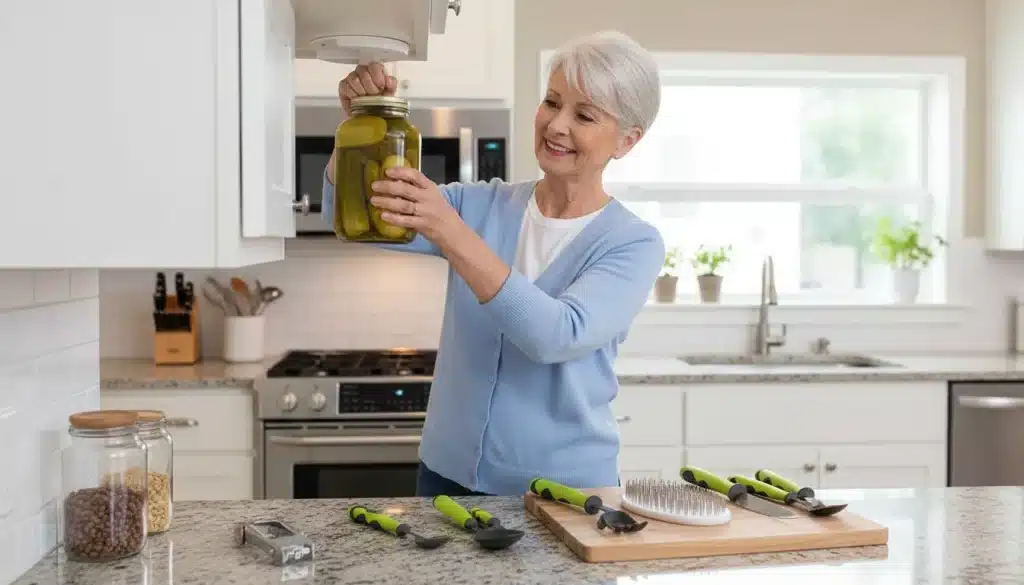
Some jar openers combine several tools in one. They open jars, bottle caps, pull-tab cans, and twist-off soda bottles. These work well if you struggle with multiple types of containers.
The trade-off is size and complexity. Multi-tools are often larger and have more parts to figure out. If you only need help with jars, a dedicated jar opener works better.
Top Features to Look For
Adjustable Sizing
Lids range from tiny baby food jars to large pickle containers. Your opener should adjust to fit all common sizes without switching attachments.
Look for tools that handle at least 1 to 4 inches in diameter. Some models go smaller or larger. Check the size range before buying.
Non-Slip Grip
The part that contacts the lid needs serious grip. Rubberized jaws or teeth work best. Smooth plastic surfaces slip, especially on metal lids.
Some openers use a ratcheting grip that tightens as you apply pressure. Others use textured rubber. Both work, but avoid any opener with smooth contact points.
Easy to Position
You should be able to place the opener on the jar with one hand. Complicated alignment or multi-step setup defeats the purpose for people with limited dexterity.
The best designs are intuitive. You can see exactly where the jar goes and how to engage the opener. No guessing.
Comfortable Handle or Button
If the tool requires pulling a lever or pressing a button, make sure you can reach it comfortably. Large, textured buttons work better than small, smooth ones.
Lever handles should be long and easy to grip. Padding helps if you have sensitive joints. Kitchen tools designed for easier gripping.
Durability
Cheap plastic openers crack after a few months. Metal mechanisms last longer and handle stuck lids without breaking.
Read reviews to see how long the tool holds up. A jar opener should last years, not weeks.
Best Jar Openers for Elderly (Different Needs & Hand Strength Levels)
Best for Severe Arthritis: Electric Jar Opener
When your hands can’t grip or twist at all, an electric jar opener for elderly users becomes necessary. These remove all manual effort.
You simply place the jar under the device and press a button. The motor grips and spins the lid off in seconds. No pain. No struggle.
Most electric models sit on the counter and run on AA batteries or a power cord. They work on lids up to 4 inches wide. Some include bottle opener attachments.
The main drawback is cost. Electric openers run between $20 and $40, compared to $10 for manual types. They also take up counter space.
But if manual openers cause pain or don’t work for you, the extra cost is worth it. These give you back kitchen independence.
Best Budget Option: Rubber Jar Gripper with Teeth
A textured rubber grip with small teeth costs under $10 and works surprisingly well for mild to moderate grip weakness.
Unlike smooth rubber grips, the teeth dig into the lid and prevent slipping. You still need some hand strength, but far less than opening jars bare-handed.
These fit in a drawer and work on any lid size. They’re lightweight and easy to use. The downside: they don’t help if your wrist can’t twist or if you have severe arthritis.
Best All-Around: Lever-Style Jar Opener
Lever jar openers balance cost, effectiveness, and ease of use. They work for most people with weak hands and don’t require installation or electricity.
You clamp the gripper onto the lid and pull the handle. The long lever amplifies your force, so minimal hand strength opens even the most stubborn jars.
These cost between $12 and $25. They adjust to fit most lid sizes and store easily in a drawer. Some models include built-in bottle openers.
Best for Multiple Container Types: Multi-Function Opener
If you struggle with jar lids, bottle caps, and pull-tab cans, a multi-function tool saves you from buying separate devices.
These combination tools usually include a jar gripper, bottle opener, can tab lifter, and twist-off cap remover. Everything lives in one compact device.
They cost slightly more than single-purpose openers but take up less storage space. Make sure the jar-opening part actually adjusts to different lid sizes.
Best Permanent Solution: Under-Cabinet Jar Opener
For people who cook regularly and need consistent help, an under-cabinet opener makes sense. Once installed, it’s always ready to use.
You don’t need to find the tool or dig through drawers. Just grab your jar, place it in the opener, and twist. The mounted gripper holds the lid while you turn the jar itself.
Installation takes about 10 minutes with a screwdriver. Most models fit standard cabinet depths. They work silently and never need batteries.
The limitation: you can’t take it with you, and it only works in one spot. But for daily use at home, this setup can’t be beat for convenience.
How to Use a Jar Opener Safely
Check the Lid Size First
Before clamping any opener onto a jar, make sure the lid fits within the tool’s size range. Forcing an oversized or undersized lid can damage both the jar and the opener.
Most jar openers mark their size limits clearly. When in doubt, test the fit before applying force.
Position the Opener Correctly
The gripper should sit evenly on the lid. Crooked placement causes slipping and makes opening harder.
Take an extra second to align the tool properly. This prevents frustration and protects your hands from sudden slips.
Use Steady Pressure
Don’t jerk or yank on manual jar openers. Smooth, steady pressure works better and reduces the chance of the tool slipping off.
If the lid doesn’t budge after a few seconds of steady force, reposition the opener and try again.
Store Jars at Counter Height
Reaching overhead or bending down makes using any jar opener harder. Keep frequently used jars at a comfortable height where you can work without straining.
This small change makes a big difference if you have mobility limits or balance concerns. Other adaptive tools that make daily life easier.
Common Problems and Solutions
The Opener Slips Off the Lid
This happens when the gripper doesn’t have enough friction or when the lid is wet or greasy. Wipe the lid dry before using the opener.
If slipping continues, try a different style of opener. Some designs grip better than others on smooth metal lids.
The Lid Still Won’t Turn
If a jar has been sealed for months or stored improperly, even the best jar opener for weak hands might struggle. Try running warm water over the lid for 30 seconds to expand the metal slightly.
Dry the lid completely before trying the opener again. The warmth breaks the vacuum seal and makes opening much easier.
Your Hands Hurt After Using the Opener
If a manual opener causes pain, you’re either using too much force or the design doesn’t match your needs. Switch to an electric model or a lever-style opener that requires less grip.
Pain means the tool isn’t working correctly for your situation. Don’t push through it.
The Opener Broke After a Few Uses
Cheap jar openers use brittle plastic that cracks under pressure. Replace it with a metal or reinforced model.
Read reviews before buying. Good jar openers last for years. If yours broke quickly, it was poorly made.
Tips for Making Jars Easier to Open
Buy Smaller Jars
Large jars create stronger vacuum seals. Smaller jars are easier to open and lighter to handle.
If you live alone or don’t cook in large batches, switch to smaller container sizes. This simple change reduces how often you need help opening things.
Store Jars Upside Down
Storing jars upside down in the fridge can prevent the contents from creating a tight seal around the lid. This old trick works especially well with jams and jellies.
Just make sure the lid is on tight first. You don’t want leaks in your refrigerator.
Ask for Help When You Need It
There’s no shame in asking family or neighbors to open stubborn jars. Many people are happy to help.
You can also pre-open jars when someone visits, so they’re ready for later use.
Keep Multiple Openers
Have one arthritis jar opener in your main kitchen drawer and another in your pantry or wherever you store bulk items. This saves trips back and forth when you’re cooking.
Backups also help if one opener breaks or gets misplaced.
Frequently Asked Questions
What is the best jar opener for elderly people with arthritis?
The best jar opener for elderly people with arthritis is one that uses leverage or electricity instead of grip strength. Electric jar openers work best for severe arthritis, while lever-style openers suit mild to moderate hand weakness.
Can a jar opener work on all lid sizes?
Most adjustable jar openers handle lids from 1 to 4 inches in diameter, which covers nearly all common jars. Check the product specifications before buying to make sure it fits your most-used container sizes. Some specialized openers work only on specific lid types.
Do automatic jar openers really work?
Yes, automatic jar openers work well for people with very weak hands. They use a motor to grip and turn the lid while you hold the jar steady. Most models open jars in 3 to 5 seconds. The main requirements are fresh batteries or a power source and a flat surface to work on.
How do I clean a jar opener?
Wipe rubber or plastic parts with a damp cloth after each use to remove food residue and oil. Don’t submerge electric models in water. For manual openers with removable parts, wash them with warm soapy water and dry completely before storing. Clean grippers maintain better traction on lids.
Are jar openers covered by insurance or Medicare?
Medicare does not typically cover jar openers because they’re considered convenience items rather than medical equipment. Some insurance plans or health savings accounts may reimburse you if your doctor writes a letter of medical necessity. Check with your specific insurance provider. Most jar openers cost under $25, so many people pay out of pocket.
What’s the difference between a jar opener and a grip strength tool?
A jar opener removes lids from containers by using leverage or a motor to reduce the force you need to apply. Grip strength tools are exercise devices designed to build hand and finger strength over time through repetitive squeezing. Jar openers solve an immediate problem, while grip tools aim to improve your strength gradually.
Can I use a jar opener if I have tremors?
Electric jar openers work best for people with tremors because you don’t need steady hands to hold or twist anything. You simply press the jar into place and let the motor do the work. Some under-cabinet models also work well since they stay mounted and don’t require you to hold the opener steady.
Do jar openers work on stuck pickle jars?
Yes, most jar openers handle stuck pickle jars effectively. The brine creates a strong seal, but lever-style and electric openers provide enough force to break it. Running warm water over the lid for 30 seconds before using the opener makes the job even easier by expanding the metal slightly.
Conclusion
Opening jars shouldn’t be a painful struggle. The right jar opener for seniors brings back kitchen independence and eliminates daily frustration.
Electric models work best if your hands can’t grip or twist at all. Lever-style openers handle most situations at a lower cost. Under-cabinet versions offer permanent convenience if you cook often.
Start with your specific needs. How weak are your hands? Do you have arthritis pain when twisting? Can you pull a lever? Your answers point you toward the right type of opener.
Most people do well with a simple lever-style opener that costs around $15. It adjusts to different lid sizes, requires minimal strength, and stores easily. If that doesn’t work, move up to an electric model.
The goal is simple: open jars without pain, without help, and without giving up foods you enjoy.
Ready to open jars easily again? Check availability on Amazon and find the jar opener that matches your needs.